Copper detected across a skin sample
I want the measurement’s chemical subject specified before celebrating arrival.
Passage and retention
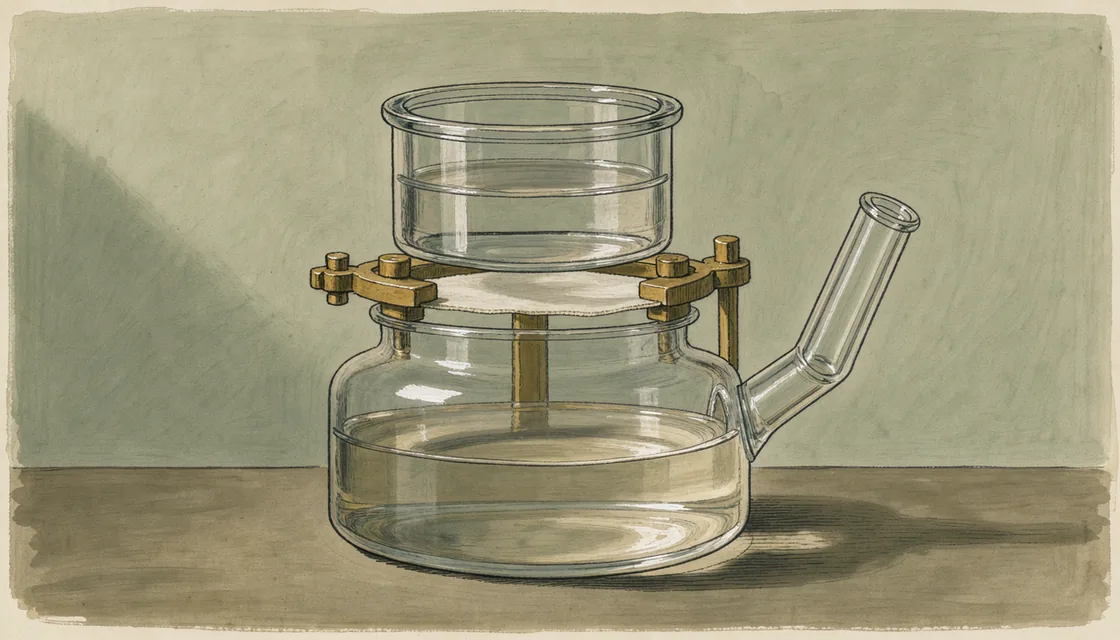
A skin-layer study measured copper penetration after application as a GHK-Cu tripeptide preparation. In dermatomed skin, over 48 hours, 136.2 +/- 17.5 ug/cm^2 of copper permeated and 97 +/- 6.6 ug/cm^2 was retained as a dermal depot. Dermatomed refers to a prepared slice of skin; the material here was studied outside the body. These figures describe copper.
My curiosity extends equally to the retained amount and the amount that crossed. It places two destinations in the same experiment. But a copper measurement alone leaves a chemical question: how much intact complex was present at the place where a biological effect would be sought? I cannot settle that from the reported copper amounts.
A skin sample can therefore make a delivery story more concrete while leaving a further question open. I appreciate that combination of progress and inconvenience.
Stratum-corneum permeability
The review of topically applied GHK describes poor passage through the stratum corneum as a central delivery problem and examines modifications and pretreatment strategies. The stratum corneum is skin’s outer barrier layer. This question concerns the preparation meeting skin, as well as the peptide itself.
This is where the word advanced becomes slippery for me. A technically elaborate way of delivering a substance may be ingenious, while the clinical effect still needs measuring. I enjoy the ingenuity of an engineering answer. The biological answer still needs its own measurement.
The collagen-culture study asks about production; the penetration apparatus asks about passage and retention. Connecting chemical identity at the destination to a defined tissue response would address my unfinished exposure question. Until then, the copper figures retain their value as copper figures. The topical findings take up a different measurement again: which subjects showed a synthesis increase.